


.svg)
245
Policymakers and experts working on climate, environment, conflict prevention, peacebuilding and financing benefiting from in-person co-facilitator supported training


146
Women policymakers and experts proactively targeted, including through our "all-women" iteration


.svg)
86
Countries represented, including conflict-affected and fragile contexts from all global regions - the Arab States, Asia and the Pacific, Sub-Saharan Africa, Latin America and the Caribbean


.svg)
80
Institutions engaged including regional entities from the Global South
.svg)
7
Iterations of Experts Academy held in New York, Cairo, Istanbul and Panama, in English, Arabic, French, Spanish


.svg)
65
Youth policymakers and practitioners trained through expert session and peer-to-peer exchange


245
Policymakers and experts working on climate, environment, conflict prevention, peacebuilding and financing benefiting from in-person co-facilitator supported training

146
Women policymakers and experts proactively targeted, including through our "all-women" iteration

86
Countries represented, including conflict-affected and fragile contexts from all global regions - the Arab States, Asia and the Pacific, Sub-Saharan Africa, Latin America and the Caribbean
80
Institutions engaged including regional entities from the Global South
7
Iterations of Experts Academy held in New York, Cairo, Istanbul and Panama, in English, Arabic, French, Spanish
65
Youth policymakers and practitioners trained through expert session and peer-to-peer exchange

Publications


Videos
Blogs



Stories


Expert Speak
-
In Cote d'Ivoire, one of the key challenges related to climate, peace and security is the intersection of resource scarcity, socio-economic inequalities, and potential conflict escalation. Displacement due to coastal erosion, flooding, and drought strains infrastructure and can create social tensions. Limited disaster preparedness and response, inadequate land-use planning, and insufficient climate finance and technology compound these challenges. Cooperation at local, national, and regional levels, alongside sustainable development and equitable resource management will be crucial for fostering peace, stability, and resilience

Assoma Lionel Leroy Yapi
Environment Expert and Engineer, Ministry of Environment, Côte d'Ivoire -
Climate change and security are deeply interconnected, each exacerbating the other’s risk. This interplay contributes to rising security risks, economic downturns, and reduced resilience, ultimately weakening societies’ ability to withstand their devastating impacts. Therefore, it is necessary to thoroughly analyse these linkages and explore solutions to mitigate their effects and prevent further repercussions.
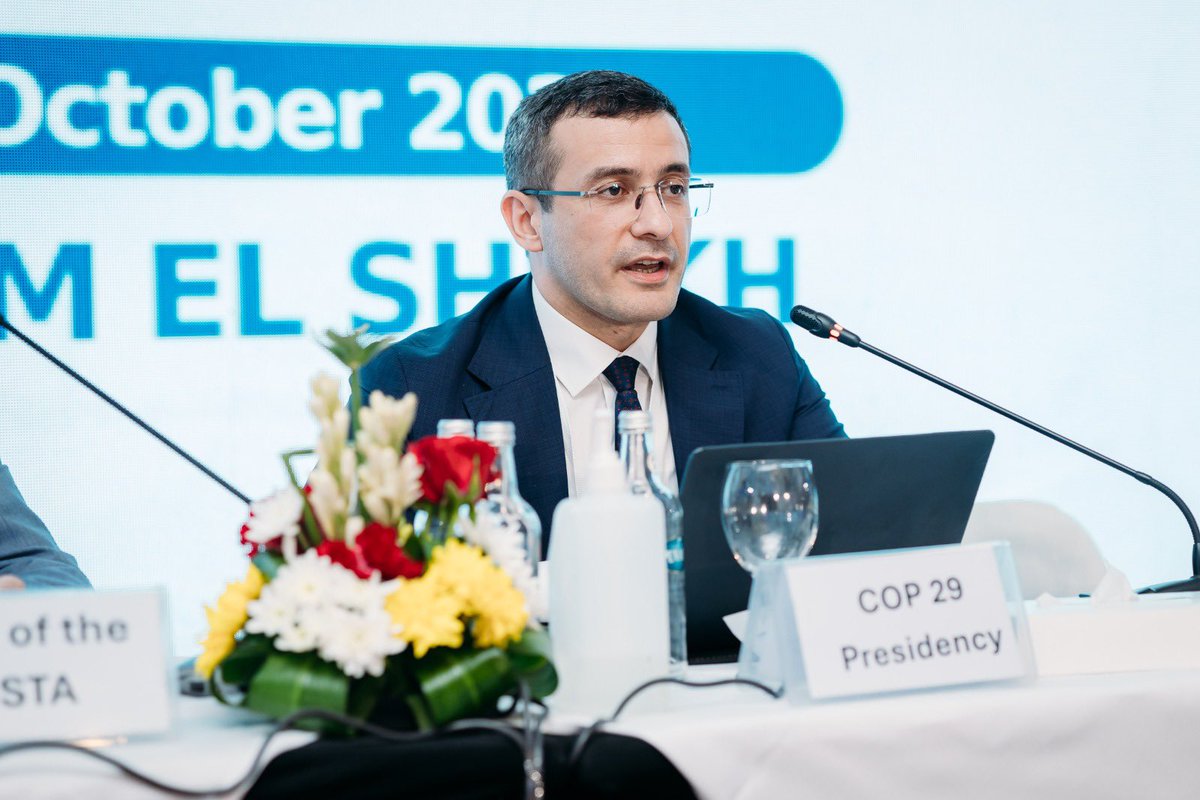
Elchin Allahverdiyev
Deputy Director/ Senior negotiator for COP29, Ministry of Foreign Affairs, Azerbaijan -
Somalia's biggest challenge related to climate, peace and security is the interplay between environmental degradation and conflict over scarce resources, compounded by weak governance. Severe droughts, floods, and desertification impact livelihoods, particularly in rural areas reliant on agriculture and pastoralism. These environmental stresses lead to resource scarcity, triggering competition and conflict among communities over water, grazing land, and food security. Climate-induced displacement contributes to overcrowding in urban areas, overstretching resources and governance systems. This instability weakens social cohesion, making it harder to build sustainable peace.

Hamza Abdiwahab
Director, Somalia Youth Hub, Ministry of Youth & Sports, Somalia -
The biggest challenge in Sri Lanka related to climate change, peace, and security is the interplay of climate-induced disasters, budgetary constraints, and a debt crisis. Climate events like floods and droughts threaten livelihoods and food security, increasing vulnerabilities and social inequalities. The ongoing debt crisis restricts government investment in climate resilience and essential infrastructure, while budget constraints hinder disaster preparedness and social safety nets. As resource scarcity intensifies, competition can lead to conflicts, especially in ethnically and socio-economically divided regions.

Maheshika Kumari
Assistant Director, Department of External Resources, Ministry of Finance, Sri Lanka -
Malawi faces a number of challenges that increase its vulnerability to a changing climate, including high population growth, dependence on rain fed agriculture, malnutrition, HIV/AIDS and inadequate power supply. Extreme climate and weather events such as drought, floods and cyclones disrupt agriculture, fisheries, and forests, which are essential for the livelihood of vulnerable populations. Women and girls fare heightened risks, as they are often forced to walk long distances to fetch water and other resources, exposing them to abuse, and other forms of violence. Finally, climate-induced displacement, such as that caused by Cyclone Freddy, has left many in camps where security is often weak, further endangering women, girls and other vulnerable groups.

Roberta Makoko
Malawi NDC Coordinator, Ministry of Natural Resources and Climate Change, Malawi -
The biggest challenge related to climate change, peace, and security in Zimbabwe is the increasing frequency and intensity of extreme weather events, such as droughts and floods, which exacerbate resource scarcity and heighten competition among communities. This situation often leads to tension and conflict, particularly in regions that are already vulnerable due to socioeconomic factors. Additionally, inadequate infrastructure and limited access to climate adaptation resources hinder our capacity to respond effectively, leaving communities more susceptible to unrest and instability.

Tetenda Mutasa
Principal Climate Change Scientist/Action for Climate Empowerment National Focal Point, Ministry of Environment, Climate and Wildlife/ Climate Change Management Department, Zimbabwe

Newsletter
Sign up for our newsletter to receive the latest updates and insights in the field of climate, peace and security.